From Prototype to Repeat Order: Build a Production Release That Holds Up
Capture what made the prototype work.
The prototype that fits may contain changes the CAD model has never seen.
A slot was opened with a file. A bracket was pulled into position while its screws were tightened. A washer corrected an unexpected gap. Those interventions can be reasonable during development, but they become hidden requirements if the next batch is ordered from the original files.
Before releasing the design, review the physical assembly alongside the model and drawing. List every rework operation, substituted fastener, shim, selective pairing, and assembly adjustment. Decide whether each is an intentional production step, a design change, or a temporary workaround that must be removed. Photograph the result, but record dimensions and part identities as well; a photo rarely defines a controlled interface.
Separate three questions: does the geometry fit, does the assembled product perform, and can the agreed process repeatedly meet the specified requirements? One successful build provides evidence for a particular configuration. It does not answer all three questions on its own.
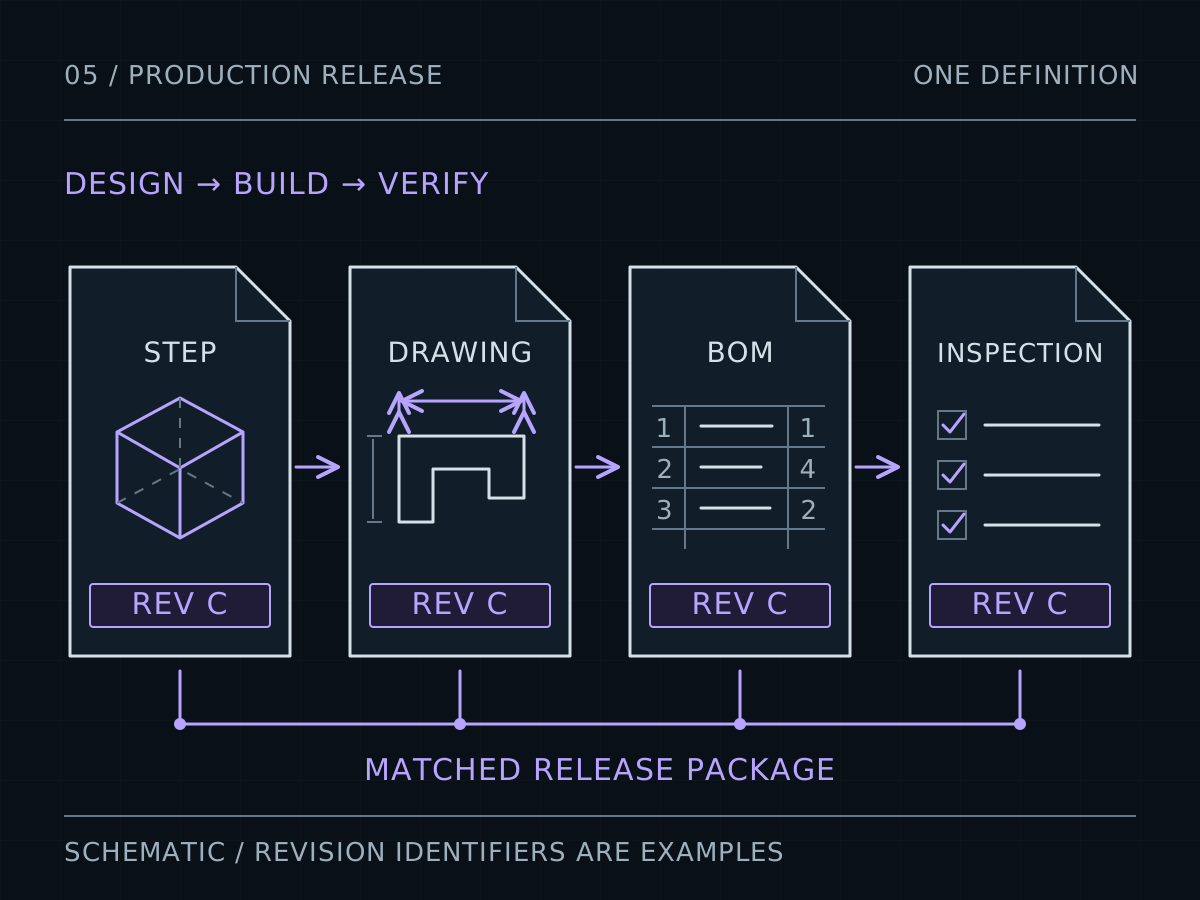
Create one coherent release package.
A release package is the approved definition for a particular build. Its contents should agree on part numbers, revisions, quantities, materials, finish, and assembly relationships. Keep it small enough to use, but complete enough that the supplier does not need to reconstruct decisions from an email trail.
| Record | What it establishes | Check before sending |
|---|---|---|
| Part and assembly models | Intended geometry and configuration | Units, revision, and correct included parts |
| Controlled drawings | Critical dimensions, material, finish, and acceptance conditions | Consistent model reference and readable notes |
| Bill of materials | Part identity and quantity per assembly | Hardware specifications and approved alternatives |
| Change record | Why the revision changed and what is affected | Interchangeability and existing stock disposition |
| Inspection plan | Characteristics, methods, and evidence to retain | Finished or unfinished condition; free or restrained state |
| Order requirements | Build quantity, delivery, packaging, and requested documents | Written supplier agreement on special requirements |
State which record controls if the model and drawing disagree, using a convention agreed with the manufacturer. The better release process catches the conflict before production. File formats are communication tools; a STEP file cannot carry every purchasing and acceptance decision. See STEP versus DXF for choosing the geometry deliverable.
Distinguish a saved version from a released revision.
Working CAD changes frequently. A manufacturing release should identify a specific approved state, not an instruction to use whatever happens to be latest. In a file workflow, that means a controlled export set and an index. In a managed CAD workflow, it means identifying the released revision and verifying the exported drawing and model match it.
Onshape’s release management documentation distinguishes design versions from approved releases and supports revision control for parts, assemblies, and drawings. Regardless of software, use part identity and revision as explicit information rather than relying on a filename such as final-final-2.step.
When a change affects interchangeability, decide whether it belongs under a new revision or a new part number according to your organization’s rules. Record what happens to the previous stock. Existing parts may be usable as-is, usable only with a specified mating revision, reworkable, or unsuitable. A newer file does not resolve that decision automatically.
Close the loop on a real design decision.
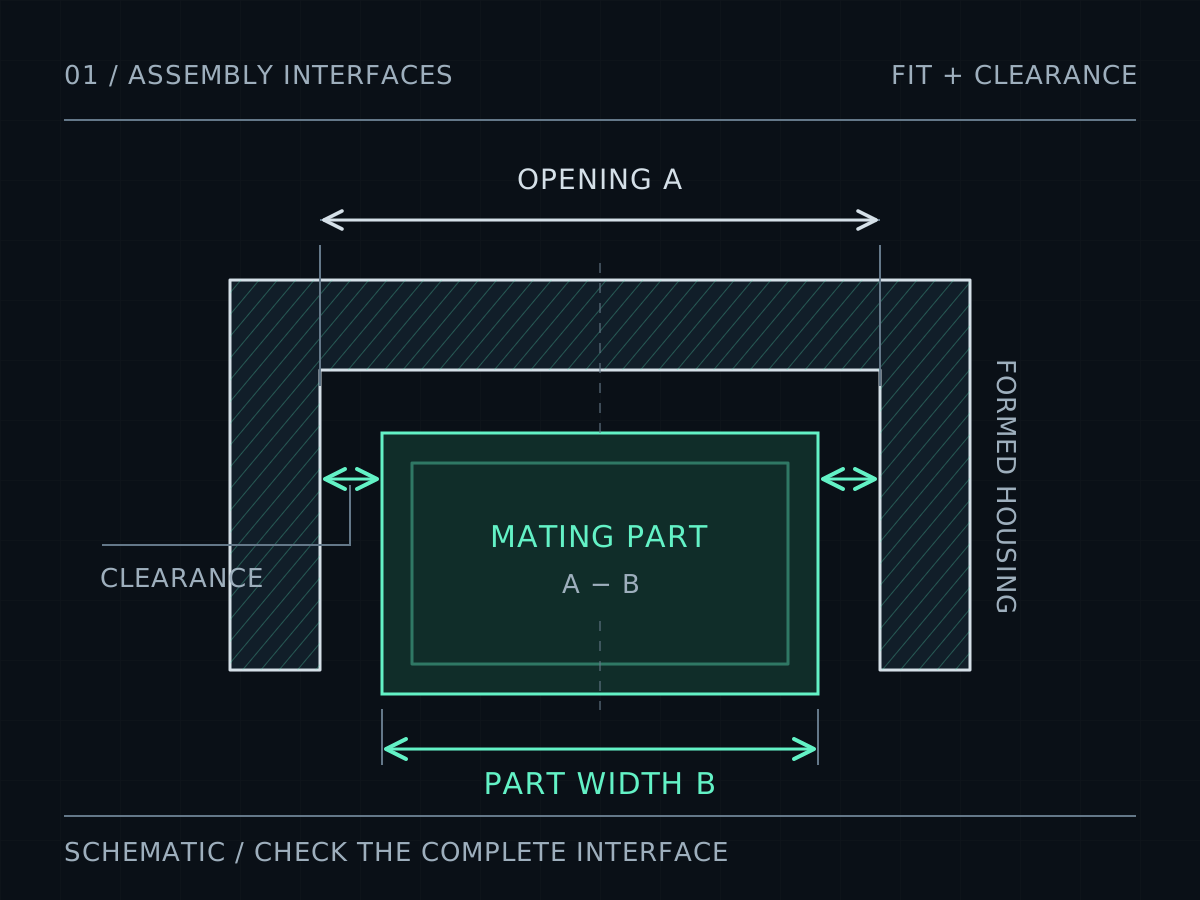
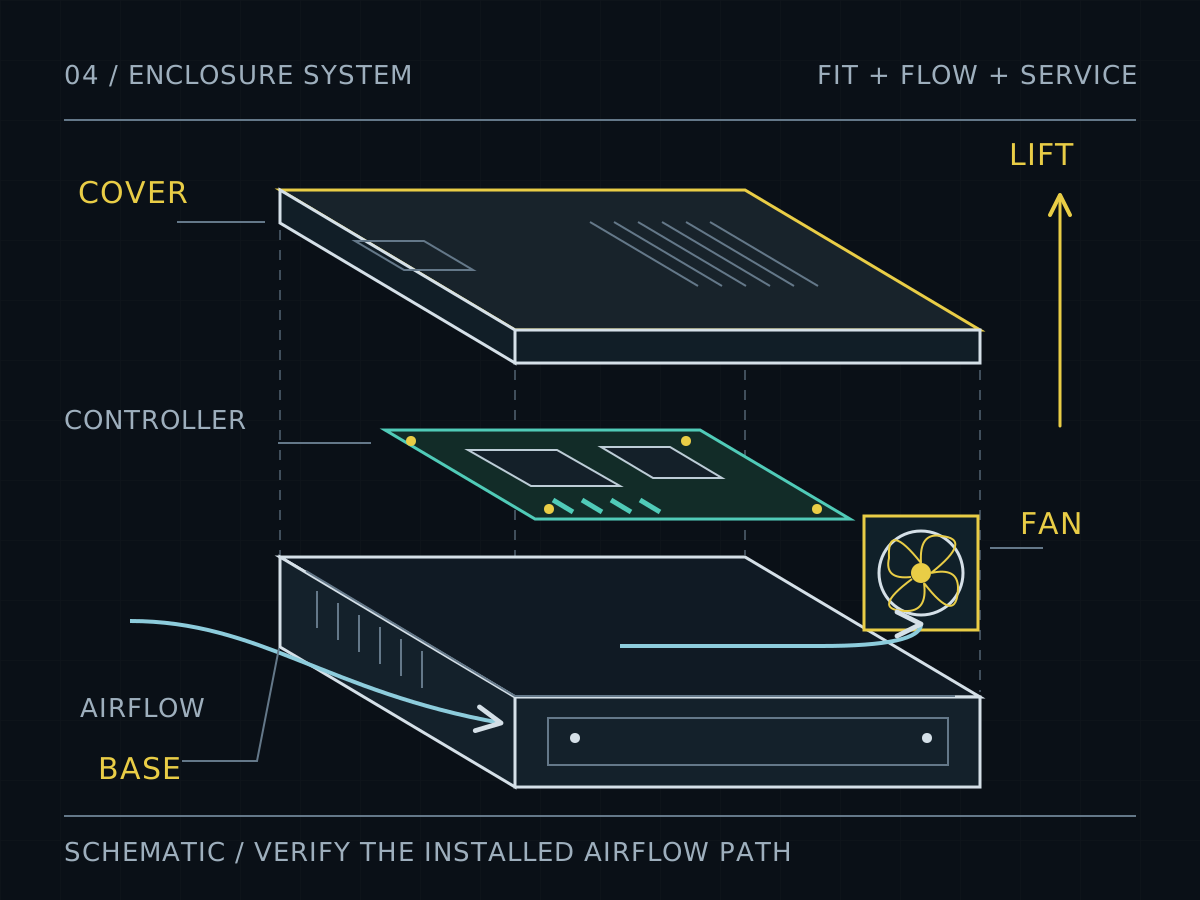
Imagine a prototype enclosure whose two mounting holes were enlarged during assembly. Investigation finds that the cover is located by two separated features that both try to control the same direction. This is a hypothetical example, not a report of a Xeon production issue.
The revised design uses one locating feature and a slot that allows motion in the intended direction. The designer verifies that the slot retains enough material and fastener bearing area and that the joint still carries the required load. The assembly drawing identifies the seating surfaces and tightening sequence. The component drawing controls the slot geometry from the appropriate datum.
The change record says more than “updated holes.” It records the original symptom, the locating conflict, the new interface, the affected cover and housing revisions, and the verification that demonstrated fit. If an older housing still works with the revised cover, document that result. If it does not, prevent the incompatible pairing in the bill of materials and ordering instructions.
Cover Rev B replaces the second locating hole with a slot along the width direction. Build with Housing Rev C. Verify the finished cover seats without forcing the sidewalls; inspect the specified slot and mating datum features. Prototype rework is incorporated into the released geometry.
A short, specific note like this is more useful than retaining a long conversation and expecting the next buyer or assembler to infer the intended result.
Define the first-build evidence before ordering.
Choose the features whose failure would prevent assembly or function. Give each an identifier, a requirement, a measurement method, and a record location. Include finish, installed hardware, or assembled condition where those change the result. For a flexible cover, measuring a free part on a table and measuring it bolted to a housing may produce different values.
Agree with the supplier on the scope and availability of any inspection report, material documentation, or first-article review before placing the order. A dimensional sample report, an assembly trial, and a formal first-article package are different deliverables. Do not assume that the phrase “first article” includes a particular standard or certification.
Retain actual measured values where they are useful for diagnosis. A row that contains only “pass” cannot show whether the process shifted toward a limit. Also record the sample identity, revision, inspection date, instrument or method, and any approved deviation. Requirements should remain separate from measurements so the original acceptance criteria cannot silently drift.
Treat repeatability as evidence gathered over time.
Repeat orders introduce variation in stock lots, tooling setups, operators, and finishing batches. A design that depended on a single favorable prototype may reveal its weakness only when those conditions change. Ask which characteristics need continued monitoring, and keep their results in production order rather than mixing them into an unlabeled average.
The NIST engineering statistics handbook places process stability before capability assessment. A capability number is not a substitute for understanding a drifting process. NIST’s capability guidance also explains the statistical assumptions and data requirements behind common indices. A handful of good samples cannot support every claim that a large, representative study might support.
Use an agreed, risk-based sampling plan appropriate to the product, process, and consequences of a defect. Avoid inventing a universal sample count for every sheet metal order. A changed critical interface may require another assembly verification even when the rest of the product remains unchanged.
Make a reorder a controlled decision.
Before repeating an order, compare the requested revision with the last accepted build. Confirm quantities per assembly, approved hardware, finish requirements, and packaging. If nothing changed, reference the same controlled package. If something changed, identify the change explicitly and review the affected interfaces.
- Account for every prototype adjustment in the released definition.
- Match model, drawing, bill of materials, and order revisions.
- Specify material and finish completely enough for the intended use.
- Identify the characteristics that control fit and function.
- Agree on inspection, documentation, and sample approval requirements.
- Record deviations and their quantity or time limits.
- Resolve compatibility and disposition of earlier stock.
- Retain the accepted build record for the next order.
The objective is a release another person can execute without reconstructing the development history. For drawing detail, use the sheet metal technical drawing guide. For an unresolved assembly gap, build the tolerance stack before releasing the next revision.
Sources & further reading.
Manufacturer data and technical references support the principles above. Worked scenarios are illustrative design studies. Confirm product-specific requirements against the selected material, hardware, and manufacturing route.
- Onshape — Release management
Version and revision identity in a managed CAD workflow. The recommended release register is an original editorial template.
- NIST — Assessing process stability
Stability as the basis for meaningful capability assessment.
- NIST — What is process capability?
Capability indices, statistical assumptions, and the need for adequate process data.
Connect this decision to the next.
Bring the interface into the quote.
Include your model, drawing, material, finish, and the dimensions that control the assembly.
Start a quote ↗