How to Choose a Powder Coat Finish for Your Part
A gloss-black faceplate looks sharp under showroom lights. Put the same finish on a rack cover that comes off every Friday, and the first thing you see may be where the technician’s sleeve brushed it.
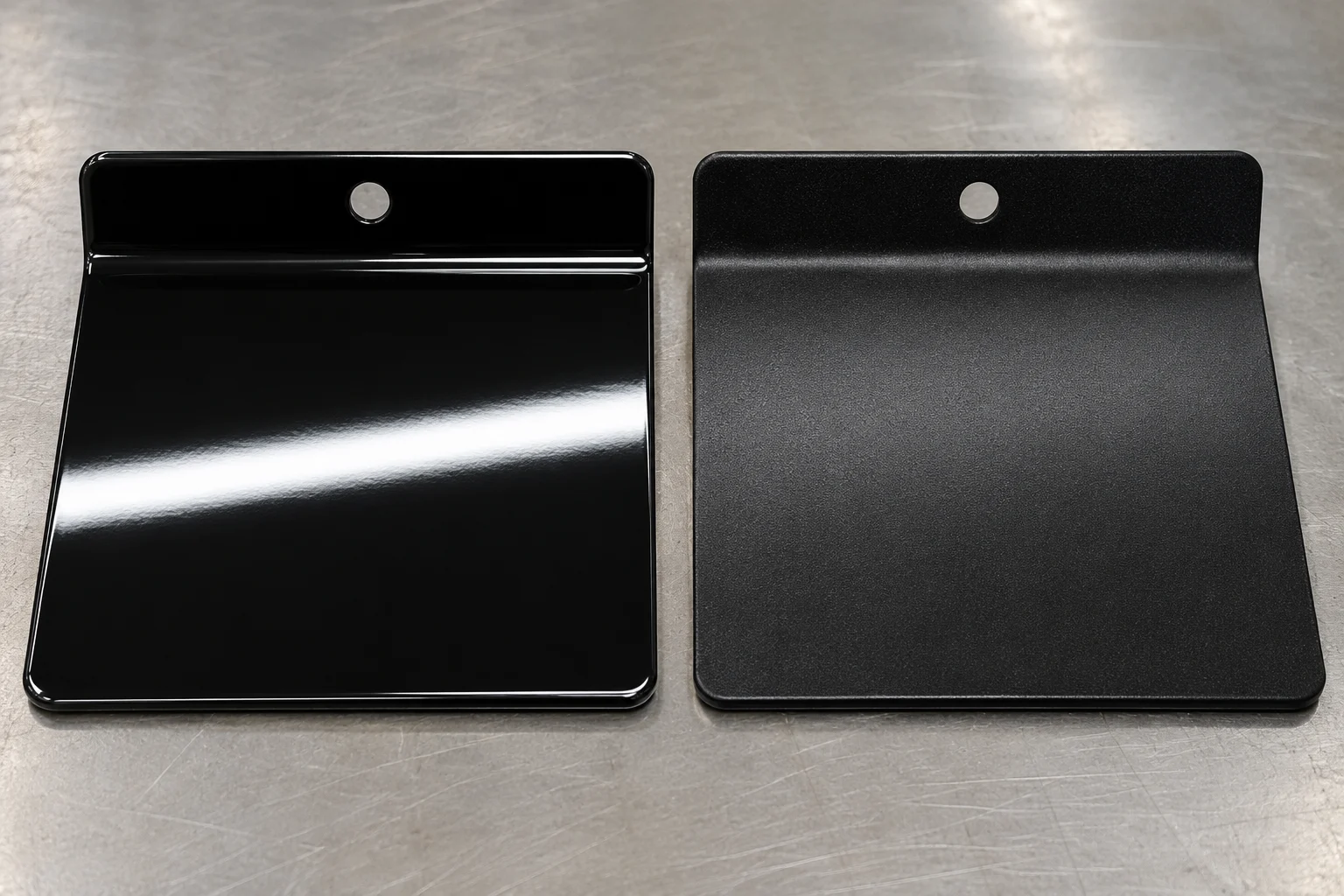
Why Black Sand works on handled parts
A smooth, high-gloss coating gives you a clear reflection. A light scuff interrupts that reflection, so even a shallow mark can stand out when you tilt the part. On a fine-textured black coating, the tiny peaks already scatter the light. Fingerprints and light handling marks tend to blend in. That makes Black Sand a good starting point for rack panels, machine covers and equipment housings that people touch every day. HUI’s guide to gloss and texture.
Black Sand can still scratch. A wrench can gouge either finish. A panel rubbing against a rail in the same spot can eventually wear through to metal. If the appearance of a handled panel is the concern, compare textures. If metal slides against the coating on every cycle, ask for abrasion data for the specific powder and look at the contact point itself. A replaceable wear strip may do more for that rail than changing the gloss. TIGER’s guide to scratches, marring and abrasion.
A name like “black sand” describes a look. The supplier’s product code identifies the powder. For example, PPG’s Black Sand Texture PCST90160 is a polyester with a published gloss of 1–4 units at 60°. That measurement describes its low sheen. Ask for scratch or abrasion results for the same product if wear is a requirement. PPG product data.
What will the part see in service?
Before you choose a color chip, describe where the part lives, what touches it and what the maintenance crew uses to clean it. Two panels can look identical on delivery and need different powders.
Sun, rain and road salt
For an outdoor enclosure, start with an exterior-rated polyester. If the enclosure has to match adjacent panels after years in the sun, ask about a superdurable polyester and its color and gloss retention. For steel exposed to road salt, have the coater review the substrate, edge preparation, pretreatment and any primer with the topcoat. An outdoor rating alone doesn’t tell you how the whole system will protect a cut edge. IFS guide to powder chemistries.
Oil, cleaners and repeated wiping
For an indoor machine panel, share the actual cleaner, its dilution and how long it stays on the part. An epoxy or epoxy-polyester hybrid may be worth evaluating for indoor service. The selected product needs to tolerate that cleaner and the wiping routine. On a face that carries adhesive labels, try the actual label on a coated sample, especially if you want texture.
Fasteners, slides and close fits
Look at where the washer turns, where the cover slides into its frame and where the assembly needs electrical contact. Film builds on each coated face and takes up clearance. Mark threads, grounding pads and precision mating features that need masking. A fine texture can hide a screwdriver rub on the visible face while the joint underneath still needs bare metal.
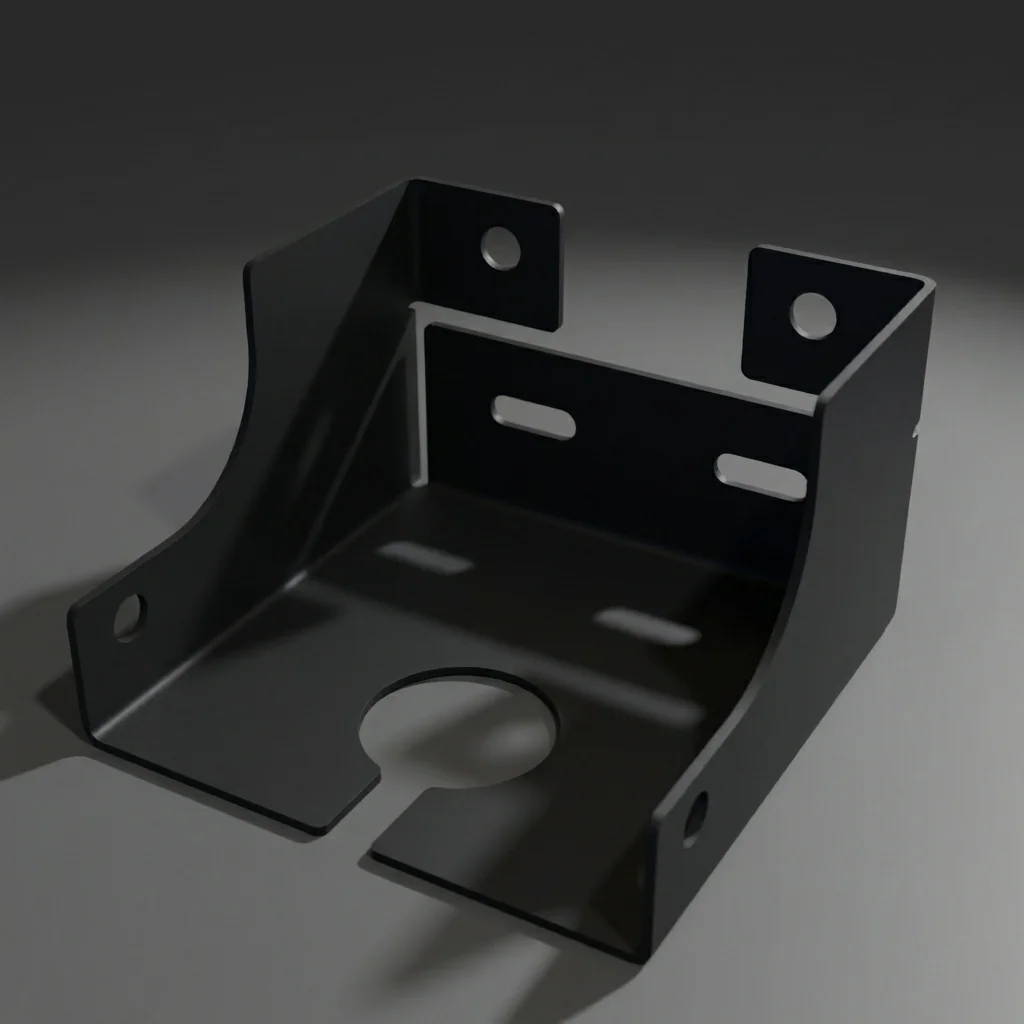
Put two samples through a normal shift
Ask the coater for your two finalists on the same metal and pretreatment planned for the job. A bent sample or a spare cover lets you check the edge, face and fasteners together. Start with both samples clean and keep an untouched area on each for comparison.
- Install and handle them. View them at the installed angle and distance. Remove and refit the cover with the same gloves and hardware your technicians use.
- Clean them the usual way. Use the specified cleaner, cloth and contact time. After drying, look for residue in the texture, a change in sheen or a scratch that remains after wiping.
- Agree on what passes. For a customer-facing panel, that might mean no visible scuff at the normal viewing distance. For a sliding interface, specify an allowable amount of wear and an agreed test. Retain the approved sample for repeat orders.
Give the coater a repeatable finish callout
A RAL number identifies a color. Add the sheen, texture, substrate, service environment, faces to coat and areas to mask. Once you approve a powder, record the manufacturer, product code and sample reference. For a specialty finish, confirm availability, minimum order and lead time before you release the drawing.
If the part is oxygen-cut carbon steel, include oxide removal in the prep plan. Even a well-chosen powder needs a sound surface underneath. Why Powder Coating Flakes on Oxygen-Cut Steel.