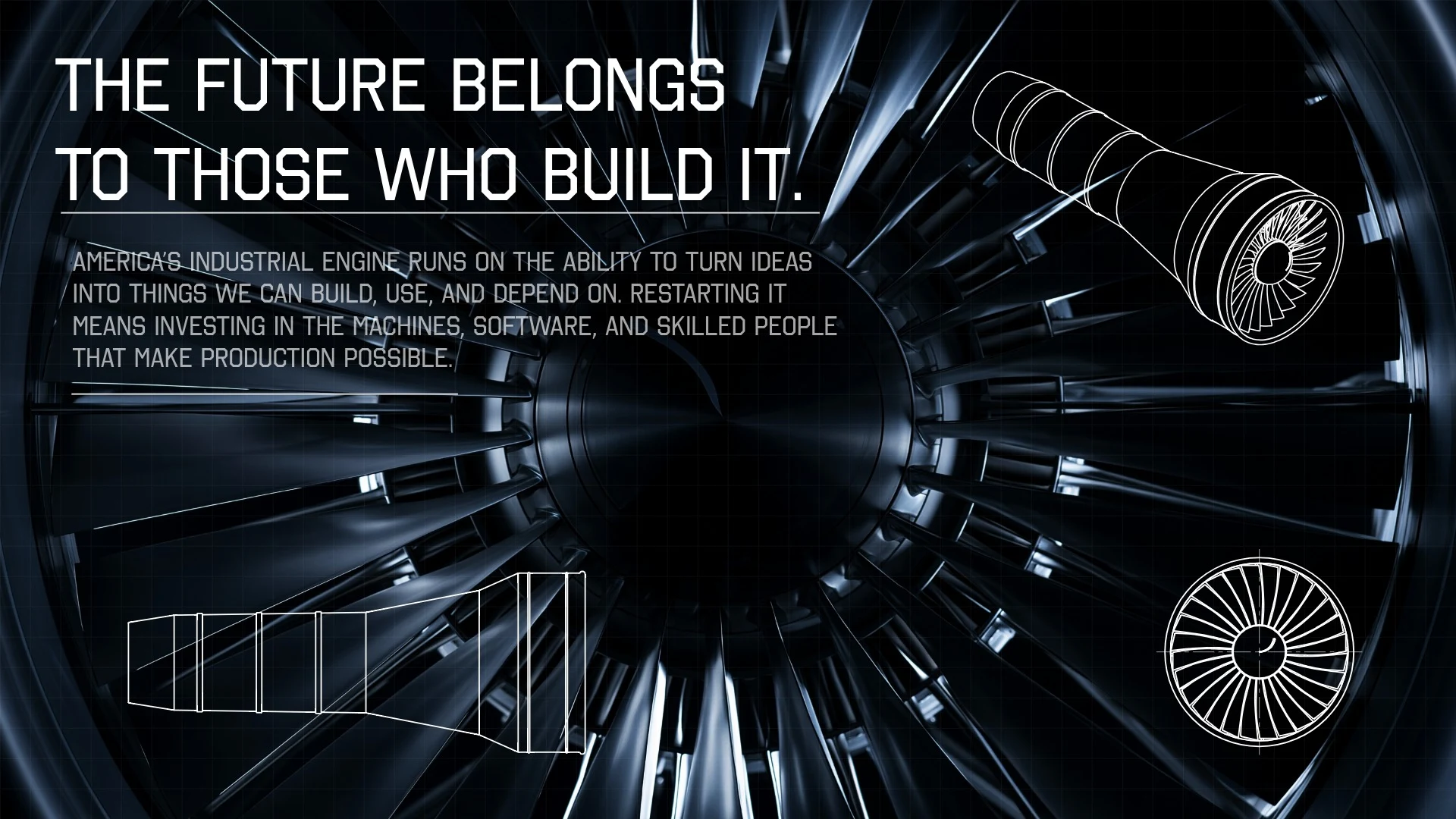
Ambition must survive contact with the physical world.
An aircraft has to fly. A power plant has to deliver electricity. A production line has to turn raw material into components that meet specification, arrive on time, and perform under pressure. Every promise of progress eventually reaches this test: can we build something that works?
America’s industrial engine runs on our ability to answer yes.
That ability gives substance to invention. It turns scientific knowledge into productive capacity, creates work that demands skill and judgment, and gives the country greater control over the systems it depends on.
Restarting that engine requires a sustained commitment to the machines, software, and people that make production possible. It requires capital willing to fund difficult engineering, institutions capable of making decisions, and leaders who take responsibility for what gets delivered.
The measure of that commitment is what comes off the line.

Invest in the capacity to deliver.
Building begins with the physical foundations: machine tools, reliable power, materials, tooling, inspection equipment, and facilities designed to produce. These investments determine whether a promising design can become a repeatable manufacturing process.
They also have to work together. A new machine creates value when material reaches it, qualified people can operate it, maintenance keeps it available, and the next operation can absorb its output. Expanding capacity means understanding the entire production system and strengthening the places that constrain it.
Software should help people do exactly that.
Consider a delayed shipment of a critical component. The production team should be able to identify the affected orders, evaluate qualified alternatives, and understand how a revised schedule would change delivery commitments. The people responsible should have the information and authority to choose a response and put it into motion.
That is the standard industrial software should meet: helping someone make a consequential decision and carry it through.
The same standard applies to artificial intelligence. Its value should be measured through specific work: helping an engineer investigate a defect, helping a planner evaluate production options, or helping a technician find the right maintenance procedure. Its recommendations must withstand the requirements of the equipment, the process, and the people accountable for the result.
A factory is an unforgiving place for technology that cannot prove its usefulness.
The strongest systems begin with the people who understand that factory. The machinist who recognizes a tool wearing out. The technician who knows why a line keeps stopping. The engineer who can connect a failed inspection to an upstream process.
Their judgment is an industrial asset. Investment should deepen it through apprenticeships, practical training, better tools, and clear paths to greater responsibility. Building advanced industry means giving skilled people more power to solve difficult problems.
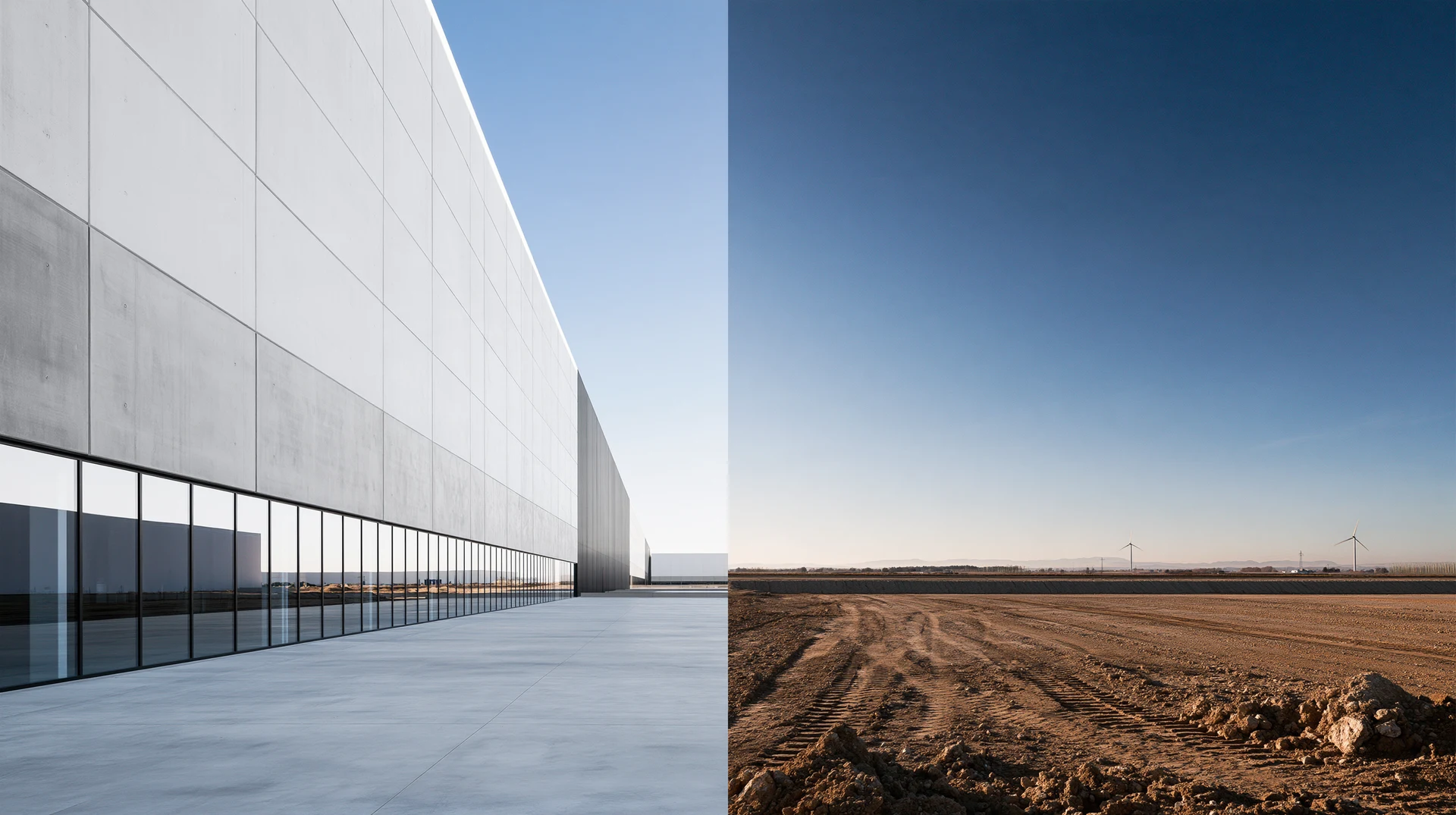
Time is part of industrial strength.
The interval between a design change and a qualified part matters. So does the time required to bring a machine into service, train an operator, approve a supplier, or resolve a recurring defect. Each delay affects how quickly an organization can learn and how much useful work it can deliver.
Those intervals deserve the same engineering attention as the product itself.
Faster execution begins with making constraints visible. Teams need shared information, clear ownership, and decisions made close enough to the work to reflect reality. Problems need a responsible person, a next action, and a way to verify that the action worked.
Speed also requires discipline. Testing, qualification, and inspection establish whether progress is real. The objective is to shorten the distance between discovering a problem and implementing a verified solution.
A production line that learns from each failure becomes more capable with every cycle. A supplier that can demonstrate consistent quality earns the opportunity to take on harder work. An apprentice who receives serious instruction becomes someone trusted with increasingly complex responsibilities.
This is how industrial investment compounds.
The work extends beyond the factory gate. Power, transportation, suppliers, training programs, and procurement decisions all shape what a manufacturer can accomplish. A country serious about production must treat those connections as part of the same undertaking.
An announced facility becomes meaningful through installed equipment, a trained workforce, qualified processes, and products delivered. Every stage requires execution. Every stage needs someone accountable for moving it forward.

Earn the advantage through performance.
Competition gives this work a demanding standard.
A racing team earns its position through the combined performance of design, manufacturing, software, and human judgment. The result exposes every weak connection. Improvements have to survive the track.
Industrial organizations should welcome that pressure to demonstrate results. Can they deliver a better product? Can they manufacture it reliably? Can they reduce waste, solve defects faster, and earn the next order through performance?
Procurement should create room for capable new entrants to prove themselves. Investment should support teams that turn technical promise into dependable output. Leadership should reward the people who identify difficult problems early and stay with them until they are solved.
The ambition should extend to the machine shop taking on its first aerospace contract, the regional supplier upgrading its equipment, and the young technician learning to maintain an automated line. Each contributes to a broader capacity to build, adapt, and respond.
Build the future into something real.
America’s industrial future will take shape through these decisions: which equipment we install, which skills we teach, which systems we connect, and which teams we trust to deliver.
At Xeon NC, this conviction starts with the part. The drawing has to communicate the intent. The material and process have to meet the requirements. The finished component has to do its job. Our place in this larger mission is to help builders carry their ideas into manufacturing.
We should approach that work with urgency and conviction. The machines need investment. The software needs to serve the work. The people doing the building need the tools, training, and responsibility to succeed.
The future belongs to those who build it. America must earn that future, one working system at a time.