The ability to act is the advantage.
The people accountable for a product need command of the path that builds it.
An engineer moves a mounting hole to clear a cable. The model changes in minutes. The consequences reach further: the drawing, the quote, the fixture, the inspection requirement, and the parts already ordered. Someone has to determine which revision will be built and who has approved it.
When those decisions are scattered across inboxes and spreadsheets, a small design change can consume days. The team spends its attention reconstructing the state of the work. Production waits while people establish what should already be clear.
This is a problem of control. A builder needs to know what is being made, which constraints matter, and what action is required to move forward. That information has to arrive while there is still time to use it.
At Xeon NC, this is the standard we are building toward: a direct path from design intent to a part that can be inspected, assembled, and put to work. The person responsible for the outcome should be able to understand that path and make informed decisions along it.
Put the production decision next to the design.
A CAD model starts the conversation. A complete production definition makes it executable.
Geometry, material, thickness, quantity, finish, and critical dimensions belong together. Each changes what the manufacturer must do. A finish can affect a fit. A bend can restrict tool access. A material choice can change how a flange forms. These decisions need to meet before the work is released.
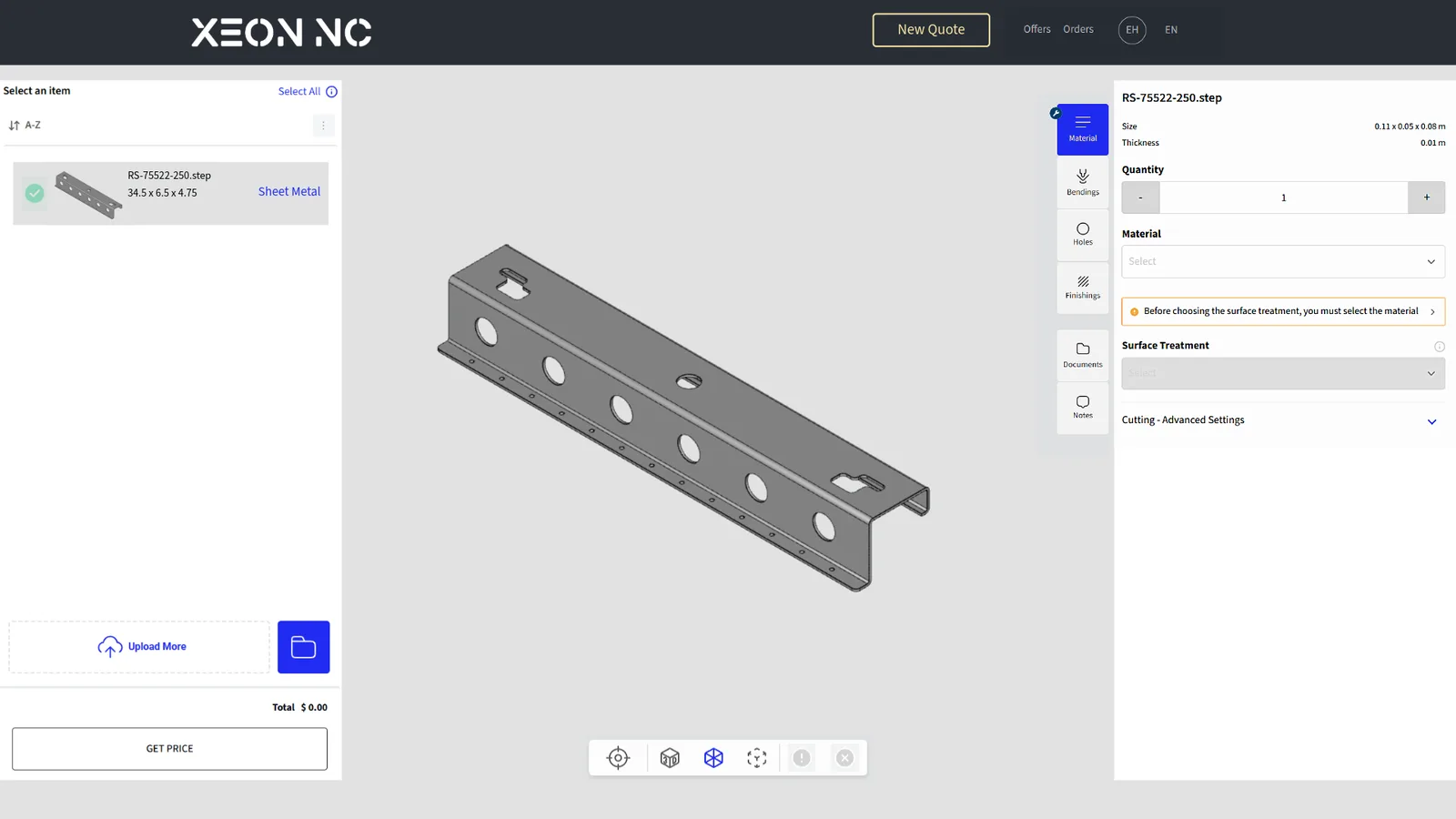
Xeon’s instant quoting workflow brings the uploaded model and supported manufacturing options into the same decision. The builder can review the configuration, understand the price, and decide whether to proceed or revise the design.
Engineering judgment belongs at the point where an unresolved requirement could change the result. A critical fit, an unusual feature, or an unclear drawing deserves a specific answer before production begins. Identifying that question early gives both teams more room to solve it.
Define the requirement, identify the constraint, and give the person making the decision enough context to act.
The decision has to reach the machine.
The value of manufacturing software is tested on the shop floor.
An approved model establishes an obligation. The material, machining or forming process, finishing requirements, and inspection plan must carry that obligation through production. A clear connection between them gives each person a basis for deciding what happens next.
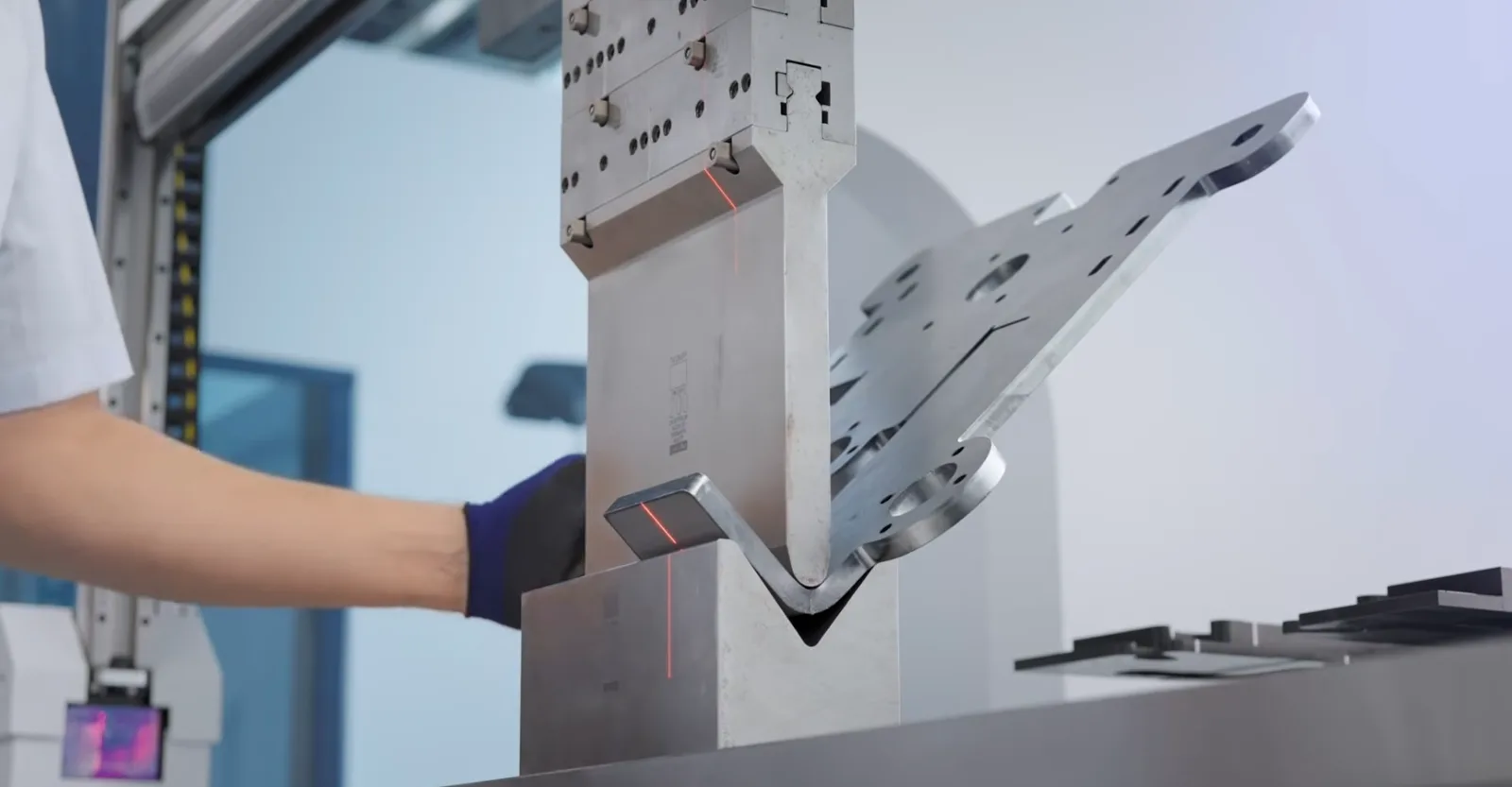
Consider a hole that must align with a mating assembly after bending. The designer needs to communicate the controlling dimension. The operator needs the correct revision and forming requirements. Inspection needs an agreed way to verify the result. The information becomes useful when it reaches each of those decisions.
This is what a digital thread should accomplish: preserve the relationship between the requirement, the work performed, and the evidence that the requirement was met.
The factory supplies the final test. The flange clears. The fastener seats. The assembly fits. Our software and production processes have to serve those outcomes, all the way through to the part in the customer’s hands.
Shorten the distance to evidence.
A team that learns sooner has more time to change the outcome.
The first physical part can expose a problem that remained invisible in CAD: restricted assembly access, a cable path that is too tight, or a surface that behaves differently after finishing. Discovering that problem while the design can still change protects the decisions that follow.
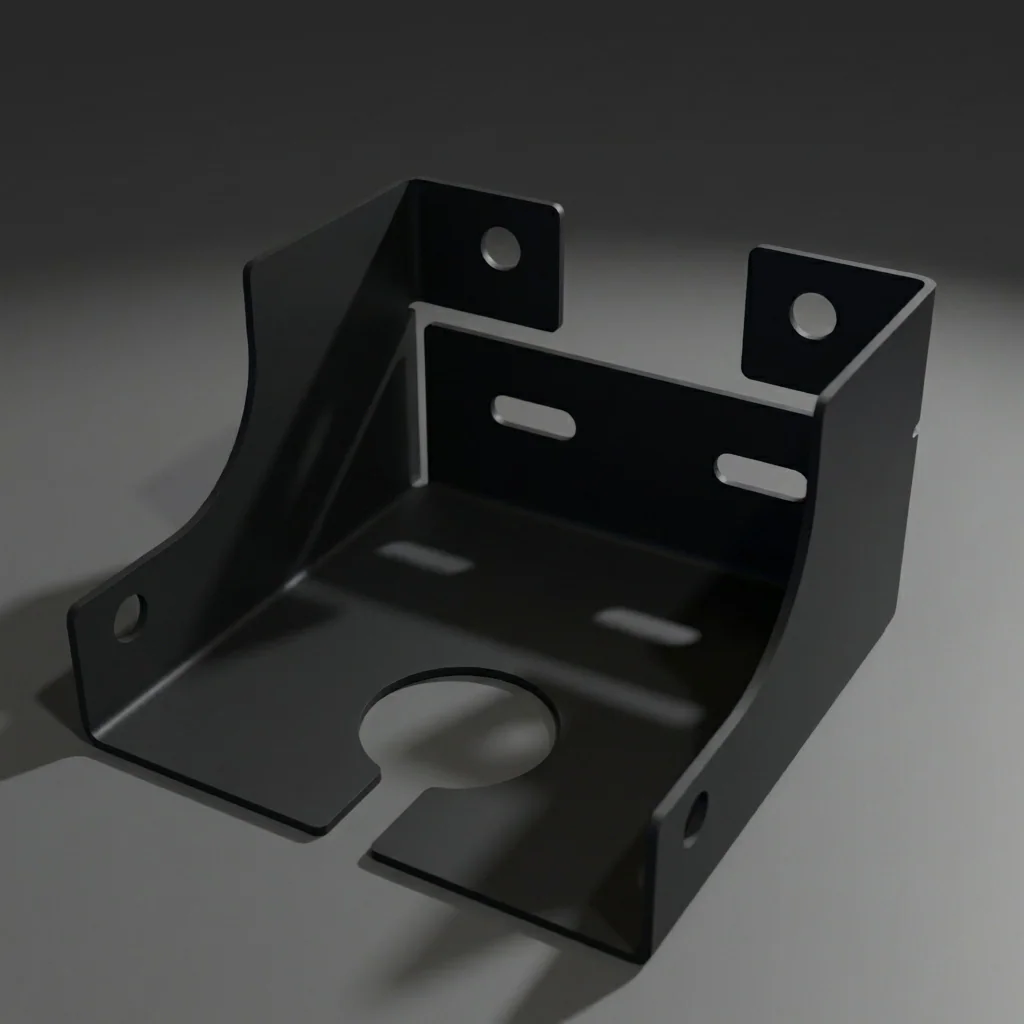
Xeon NC has no minimum order. A builder can begin with one part, evaluate it in the real assembly, and revise the design before committing to a larger quantity. The next order can reflect what the first part taught them.
Express intent
Create the production definition.
Make evidence
Turn the model into a real part.
Meet reality
Test fit, function, and finish.
Revise fast
Return with a stronger model.
Back what works
Produce the design that earned it.
Each pass through this sequence should retire a specific uncertainty. Does the bracket fit? Can the assembly be serviced? Does the selected finish meet the application? A prototype earns its value by producing an answer the team can use.
Speed creates an advantage when it increases the number of informed decisions a team can make before time, tooling, and inventory constrain its options.
Industrial capacity is built by using it.
American manufacturing becomes stronger when more people can put it to work.
A machine, an experienced operator, and a reliable inspection process represent the ability to solve a physical problem. That capability matters to the small team building its first assembly as much as it matters to an established manufacturer releasing another production run.
Xeon NC’s place in this work is in Nampa, Idaho. We connect builders to laser cutting, bending, machining, and finishing through a production path they can use from prototype onward.
Proximity can make difficult conversations more direct. Engineers and manufacturers can work through a revision, clarify an inspection requirement, and establish what the next build needs to prove. Sustaining that relationship builds knowledge that carries into future work.
The capacity to build is accumulated through practice. Each qualified process, solved production problem, and skilled person strengthens what a factory can take on next. Making that capability accessible expands the range of ideas that have a chance to become working hardware.
Keep authority with the people who carry the consequence.
A useful system makes responsibility clear at every step.
The customer owns the design intent. Engineering resolves manufacturing ambiguity. Operators turn the approved definition into a physical part. Quality determines whether the result is ready to ship. Each needs enough context to exercise judgment and a clear route to raise a problem.
Automation should remove repeated data entry, surface missing information, and make the next action clear. When the physical result raises a question, the responsible person must have room to investigate and resolve it.
Build the next decision into metal.
Progress begins with a requirement that someone is prepared to test.
Bring the model. Identify the dimensions and features that control whether the part works. Review the material, process, finish, and quantity. Resolve the open questions. Then put the design through the discipline of a real build.
That sequence turns an idea into something a team can measure and improve. Repeated with care, it creates the confidence to commit to the next design, the next order, and the next product.
This is the manufacturing relationship we want builders to have: informed, direct, and close enough to the work to influence the result. The people carrying the responsibility should have a clear path to act.
Take command of the next build.
Upload your CAD, review the production options, and establish what your first part needs to prove.
Start an Instant QuoteFrom principle to practice.
What does manufacturing control mean?
It means keeping the design intent, approved configuration, active revision, production requirements, and inspection criteria connected so the people responsible can make informed decisions.
Where does human judgment belong?
Where an unresolved question could change the physical result. Engineering, operators, and quality teams need the context and authority to identify a problem, resolve it, and verify the outcome.
How does instant quoting support the process?
For supported work, it brings the uploaded model, manufacturing options, and price into one workflow. The customer can review the configuration before ordering and seek clarification when a requirement needs engineering review.
Can I begin with a single part?
Yes. Xeon NC has no minimum order. You can begin with one part, evaluate it in your application, and use what you learn to guide the next revision or quantity.